
Helping my aging mother move – Part 1
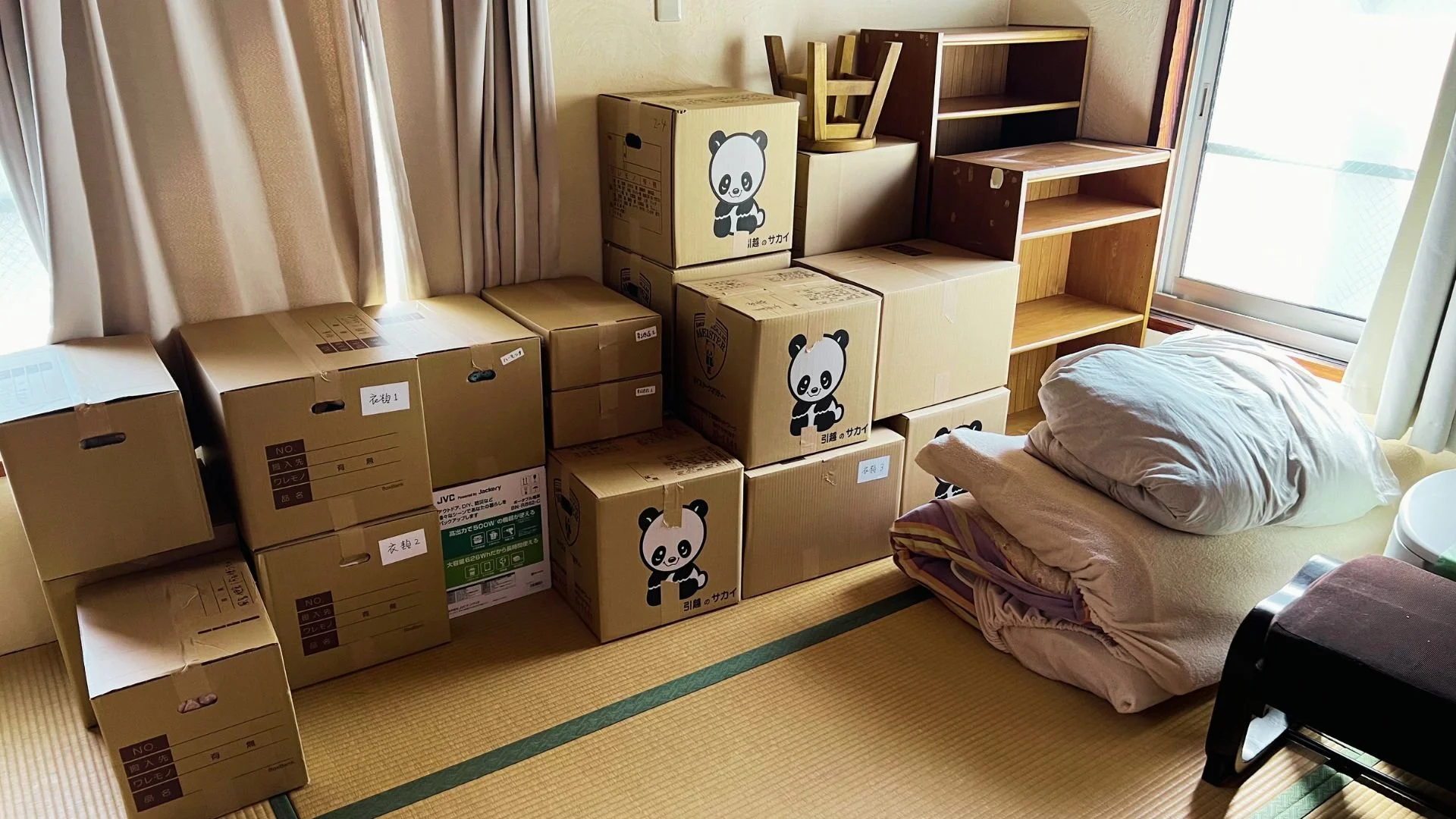
Packed boxes before the move
In March this year, my sister and I helped my mother move into a smaller unit in Japan. I live in Sydney, but I had over a week in my hometown to help her out.
Here are some facts:
My mother moved to a smaller room in a different unit in the same town.
This was significantly smaller than where she lived, a 2-bedroom apartment with traditional storage cabinets/closets (a.k.a. ‘oshiire’ in Japanese), plus a few storage rooms.
She hired a removalist to move packed boxes and furniture.
We could leave appliances, furniture and items she no longer needed as the building she lived in was going to be demolished.
What we’ve done to prepare for the move:
There wasn’t much time, as the day I arrived was the day before her move. She still had around 80% of her items to pack into boxes.
I went through her items with her using the KonMari method quite quickly which wasn’t ideal. However, if she wanted to keep certain items after the move, she had a few weeks to go and get them from the old place.
My sister and I packed all items that she wasn’t going to use soon into boxes. We placed those boxes in one area so that the removalists won’t get confused about what to take and what to leave.
Several months before the move, my mother started selling items she wasn’t using on Mercari (a Japanese version of Facebook marketplace). This helped in reducing her unused items but also provided her with a bit of pocket money.
After the move:
My sister and I placed her furniture in the room with my mother, focusing on what works best for her.
My mother had an overflow of documents and miscellaneous items in her room. I took away some items to make room and placed them where she was likely to use them, for example, disposable masks near the entrance so that she could put one on before going out.
She had a lot of food and cleaning items as stock. This is quite normal for Japanese people as they often have natural disasters, such as earthquakes where gas, water and/or electricity supplies stop for a period of time. However, one can stock up too much on these items.
The hanging pipe in the closet was yet to be installed when she moved in. I met with her via Zoom a month later when it was installed to advise her on how to use her closet. I suggested that she hang as many clothes as possible as we tried to keep extra storage items to minimal. This way, she could easily see all her clothes in one place.
In Part 2, I will share what I’ve learnt through this process.
